
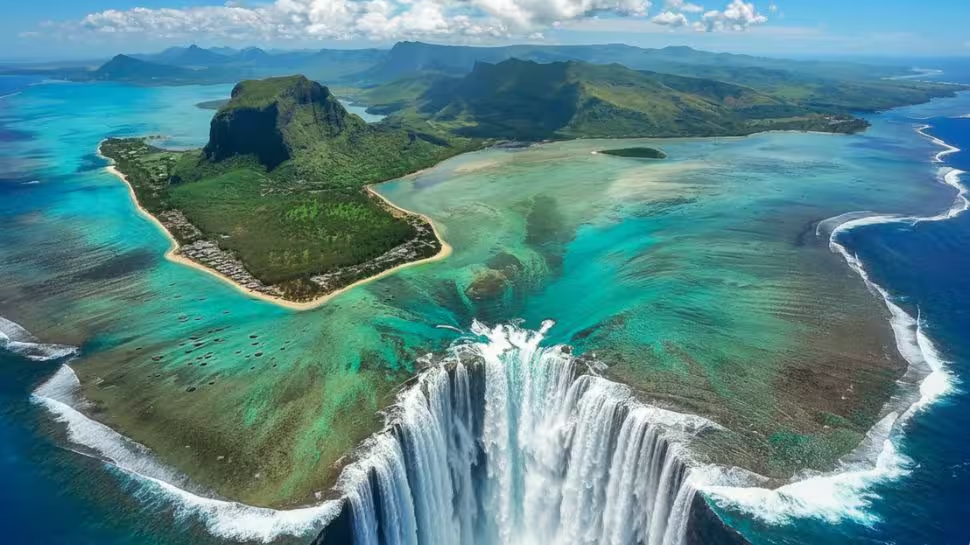
When you think of waterfalls, you probably imagine water crashing down cliffs into rivers below. But one of the largest waterfalls on Earth isn’t on land at all—it’s hidden deep beneath the ocean’s surface. Located in the Denmark Strait between Greenland and Iceland, this underwater waterfall is the largest known on Earth.
Though invisible to the human eye, it’s a powerful force shaping ocean circulation and Earth’s climate.
What Is the Denmark Strait Underwater Waterfall?
The Denmark Strait underwater waterfall forms where cold, dense water from the Nordic Seas flows into the warmer Atlantic Ocean. As this heavier water moves south, it spills over an underwater ridge, plunging downward like a waterfall.
This submerged cascade drops more than 3,500 meters (11,500 feet)—far taller than any waterfall on land.
Why Does Water Fall Underwater?
The key lies in density differences, not gravity alone. Cold water is denser than warm water, and salty water is denser than fresh water.
In the Denmark Strait:
- Cold, salty Arctic water sinks beneath warmer Atlantic water
- Density differences force the heavier water downward
- The flow accelerates as it moves over the underwater ridge
The result is a slow-motion waterfall, invisible but immensely powerful.
Bigger Than Any Waterfall on Land
By volume, the Denmark Strait waterfall dwarfs every land-based waterfall on Earth. It moves millions of cubic meters of water per second, playing a major role in global ocean circulation.
This underwater flow helps drive the Atlantic Meridional Overturning Circulation, a system of currents that regulates climate across Europe and North America.
Why This Waterfall Matters for Climate
Without this underwater waterfall, Earth’s climate would be drastically different. The movement of cold water helps:
- Regulate global temperatures
- Transport nutrients through the oceans
- Influence weather patterns
If this system were disrupted, it could lead to major climate shifts, including colder temperatures in parts of Europe.
How Scientists Discovered It
Scientists detected the underwater waterfall using:
- Temperature sensors
- Salinity measurements
- Submersible instruments
- Computer modeling
By tracking water movement across the seafloor, they revealed a hidden process shaping the planet on a massive scale.
A Hidden Wonder of the Natural World
The Denmark Strait waterfall reminds us that some of Earth’s greatest natural phenomena are completely invisible. Deep beneath the waves, vast forces are constantly at work, shaping oceans, climates, and ecosystems.
Final Thoughts
A waterfall inside the ocean may sound impossible, but the Denmark Strait proves otherwise. Driven by temperature and salinity, this hidden giant moves more water than any waterfall on land and quietly helps regulate Earth’s climate.
It’s a powerful reminder that the most extraordinary wonders of our planet don’t always announce themselves—they operate silently, beneath the surface.
Related Posts