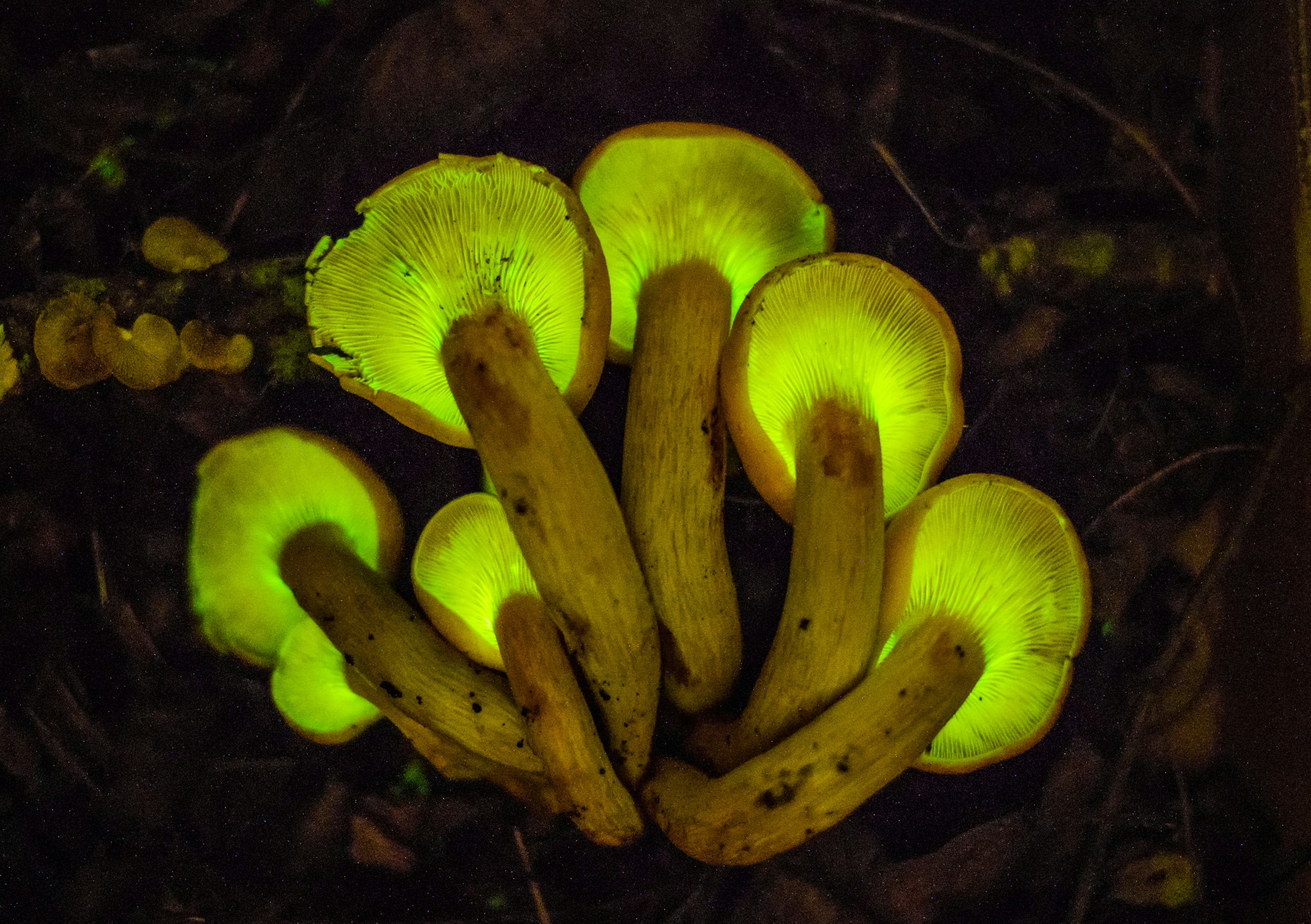
Glowing forests, illuminated tree trunks, and mushrooms that shine as tiny lanterns may sound like scenes from a fantasy movie. But this phenomenon is very real. Some mushrooms naturally glow in the dark, emitting a soft greenish light known as bioluminescence. No special effects. No genetic engineering. Just nature doing something extraordinary.
These glowing fungi have fascinated humans for centuries, inspiring myths, folklore, and modern scientific research alike.
What Is Bioluminescence?
Bioluminescence is the ability of living organisms to produce light through chemical reactions inside their bodies. While it’s commonly associated with fireflies or deep-sea creatures, fungi are one of the lesser-known—but most magical—bioluminescent organisms.
In glowing mushrooms, light is produced when a molecule called luciferin reacts with oxygen in the presence of an enzyme known as luciferase. This reaction releases energy as visible light.
The glow is usually:
- Greenish or pale yellow
- Soft rather than bright
- Most visible in complete darkness
How Many Mushrooms Glow?
Scientists have identified over 80 species of bioluminescent mushrooms, and new ones are still being discovered. These fungi are found across the globe, especially in warm, humid regions.
Notable locations include:
- Tropical forests in Brazil
- Southeast Asia
- Japan
- Parts of Australia
- The Americas
Some species glow only in their caps, others in their stems, and some even illuminate the surrounding wood they grow on.
Why Do Mushrooms Glow?
For a long time, scientists were puzzled by this question. Producing light requires energy, so there must be an evolutionary advantage.
The leading theory is spore dispersal. At night, glowing mushrooms attract insects, which land on them and help spread their spores to new locations. This is especially useful in dense forests where wind dispersal is limited.
Other possible reasons include:
- Warning signals to predators
- Byproducts of metabolic processes
- Attracting nocturnal animals
While research continues, spore attraction remains the most widely accepted explanation.
Famous Glowing Mushrooms
Some bioluminescent fungi have become famous for their eerie beauty:
- Mycena chlorophos – Known for its bright glow, often found in Asia
- Panellus stipticus – One of the first glowing fungi studied scientifically
- Omphalotus olearius – Also called the “jack-o’-lantern mushroom,” found in Europe and North America
These mushrooms can make forests appear enchanted, especially after rain, when conditions are perfect for glowing.
When Is the Glow Visible?
The glow is most visible:
- At night
- In dark, forested areas
- During humid or wet conditions
Human eyes take time to adjust to darkness, so observers often need several minutes before noticing the light. Cameras with long exposure settings capture the glow far more vividly than the naked eye.
The Role of Glowing Mushrooms in Science
Bioluminescent fungi are more than just beautiful—they’re scientifically valuable. Studying them helps researchers understand:
- Natural chemical reactions
- Energy-efficient light production
- Ecosystem interactions
Scientists are exploring how fungal bioluminescence could inspire sustainable lighting, environmental sensors, and biological research tools.
Myths and Folklore
Before science explained the glow of mushrooms, people believed they were magical or supernatural. In some cultures, glowing fungi were thought to mark fairy paths or spirit territories. Others believed they were omens or signs of hidden treasure.
While we now understand the chemistry, the sense of wonder hasn’t faded.
Final Thoughts
Glowing mushrooms are a reminder that the natural world doesn’t need imagination to be extraordinary. Quietly shining in dark forests, they prove that Earth is filled with wonders that feel unreal—but are entirely natural.
No science fiction. No fantasy. Just fungi lighting up the night in one of nature’s most beautiful displays.
Related Posts