
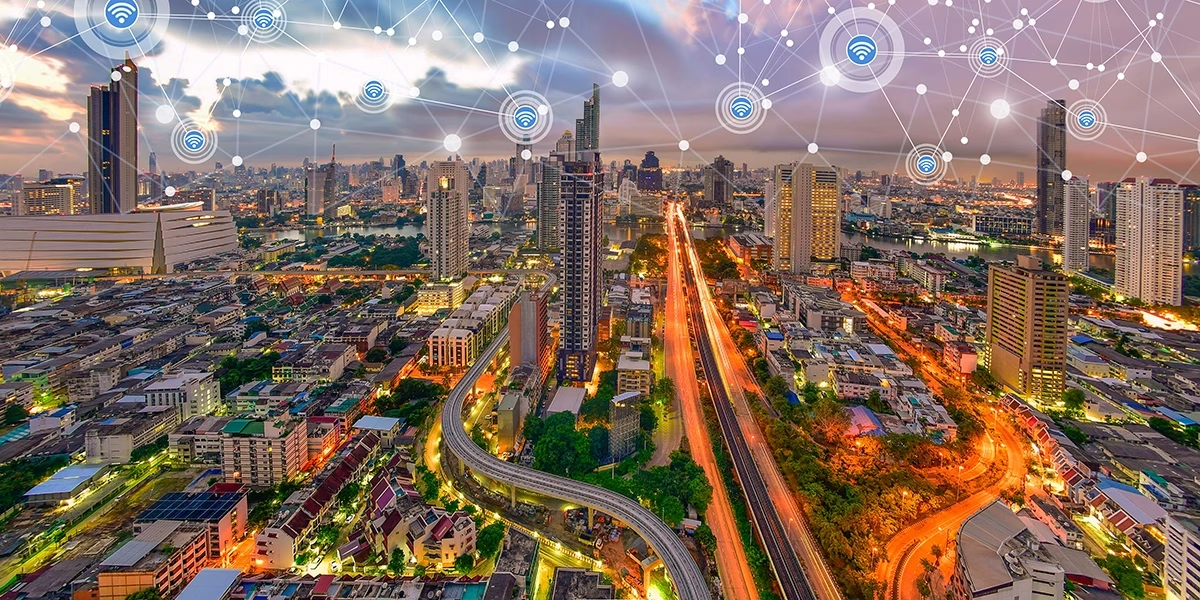
As urban populations continue to grow, cities worldwide face increasing challenges in infrastructure, transportation, energy, and quality of life. Traditional urban systems often struggle to keep pace with rapid growth, leading to congestion, pollution, and inefficient public services. Smart cities offer a forward-looking approach, leveraging advanced technologies and data-driven systems to create more efficient, sustainable, and livable urban environments. Through innovation and connectivity, smart cities are redefining the future of urban living.
What Is a Smart City?
A smart city employs digital technologies, data analytics, and interconnected systems to improve city operations and enhance residents’ quality of life. These cities integrate information and communication technology (ICT) with physical infrastructure to manage resources efficiently. From innovative traffic systems to intelligent energy grids, technology enables cities to respond dynamically to the needs of their populations.
The goal of a smart city is not merely automation but the creation of a human-centered environment in which technology supports economic growth, environmental sustainability, and social inclusion.
Smart Infrastructure and Urban Planning
One of the core components of smart cities is intelligent infrastructure. Sensors embedded in roads, bridges, and buildings collect real-time data on usage, wear, and environmental conditions. This data helps city planners proactively maintain infrastructure, reducing costs and preventing failures.
Advanced urban planning tools use artificial intelligence and geographic information systems to design cities that optimize space, reduce congestion, and enhance accessibility. Smart zoning and digital modeling allow governments to simulate development scenarios and make informed decisions that support long-term growth.
Transforming Transportation Systems
Transportation is a primary focus of smart city initiatives. Smart traffic management systems use real-time data to adjust traffic signals, reducing congestion and travel time. Connected vehicles and intelligent transport networks improve road safety by preventing accidents and optimizing traffic flow.
Public transportation also benefits from technology. Real-time tracking, digital ticketing, and predictive scheduling enhance the reliability and user-friendliness of transit systems. In the future, autonomous vehicles and shared mobility platforms are expected to transform urban transportation further, reducing emissions and improving accessibility.
Energy Efficiency and Sustainability
Smart cities prioritize energy efficiency and environmental sustainability. Smart grids monitor energy consumption patterns and adjust supply to meet demand efficiently. This reduces energy waste and lowers costs for both providers and consumers.
Renewable energy integration is another key feature of smart urban living. Solar panels, wind energy systems, and energy storage solutions are managed through intelligent platforms that balance supply and demand. Smart buildings use automated lighting, heating, and cooling systems to minimize energy usage while maintaining comfort.
Improving Public Safety and Security
Technology plays a vital role in enhancing public safety within smart cities. Smart surveillance systems, emergency response platforms, and connected communication networks help authorities respond quickly to incidents. AI-powered analytics can identify patterns that support crime prevention and disaster preparedness.
Emergency services benefit from real-time data that improves coordination and response times. Whether dealing with traffic accidents, medical emergencies, or natural disasters, smart systems enable faster and more effective interventions.
Digital Governance and Citizen Engagement
Smart cities also transform governance by making public services more accessible and transparent. Digital platforms allow residents to access services, pay bills, report issues, and participate in decision-making processes online. This improves efficiency and strengthens trust between governments and citizens.
Data-driven governance enables city officials to monitor performance, allocate resources effectively, and proactively address community needs. By engaging citizens through technology, smart cities foster inclusivity and shared responsibility.
Healthcare and Quality of Life
Digital health technologies increasingly support healthcare services in smart cities. Telemedicine, remote monitoring, and AI-driven diagnostics improve access to care, particularly for older adults and underserved populations. Smart health systems reduce strain on hospitals and support preventive care.
Beyond healthcare, smart cities enhance overall quality of life through connected public spaces, smart waste management, and intelligent environmental monitoring. Air quality sensors, water management systems, and smart lighting contribute to healthier and more pleasant urban environments.
Challenges and Ethical Considerations
Despite their benefits, smart cities face challenges related to data privacy, cybersecurity, and digital inequality. The collection of vast amounts of data raises concerns about surveillance and personal freedom. Ensuring secure systems and transparent data policies is essential to maintaining public trust.
Additionally, access to technology must be equitable. Without inclusive planning, smart cities risk widening social gaps by excluding those without digital access or skills.
The Future of Urban Living
Smart cities represent the future of urban living, where technology and innovation address complex urban challenges. As cities continue to adopt smart solutions, collaboration between governments, businesses, and citizens will be crucial. By prioritizing sustainability, inclusivity, and human-centered design, smart cities can create resilient urban environments that improve life for generations to come.
Related Posts