
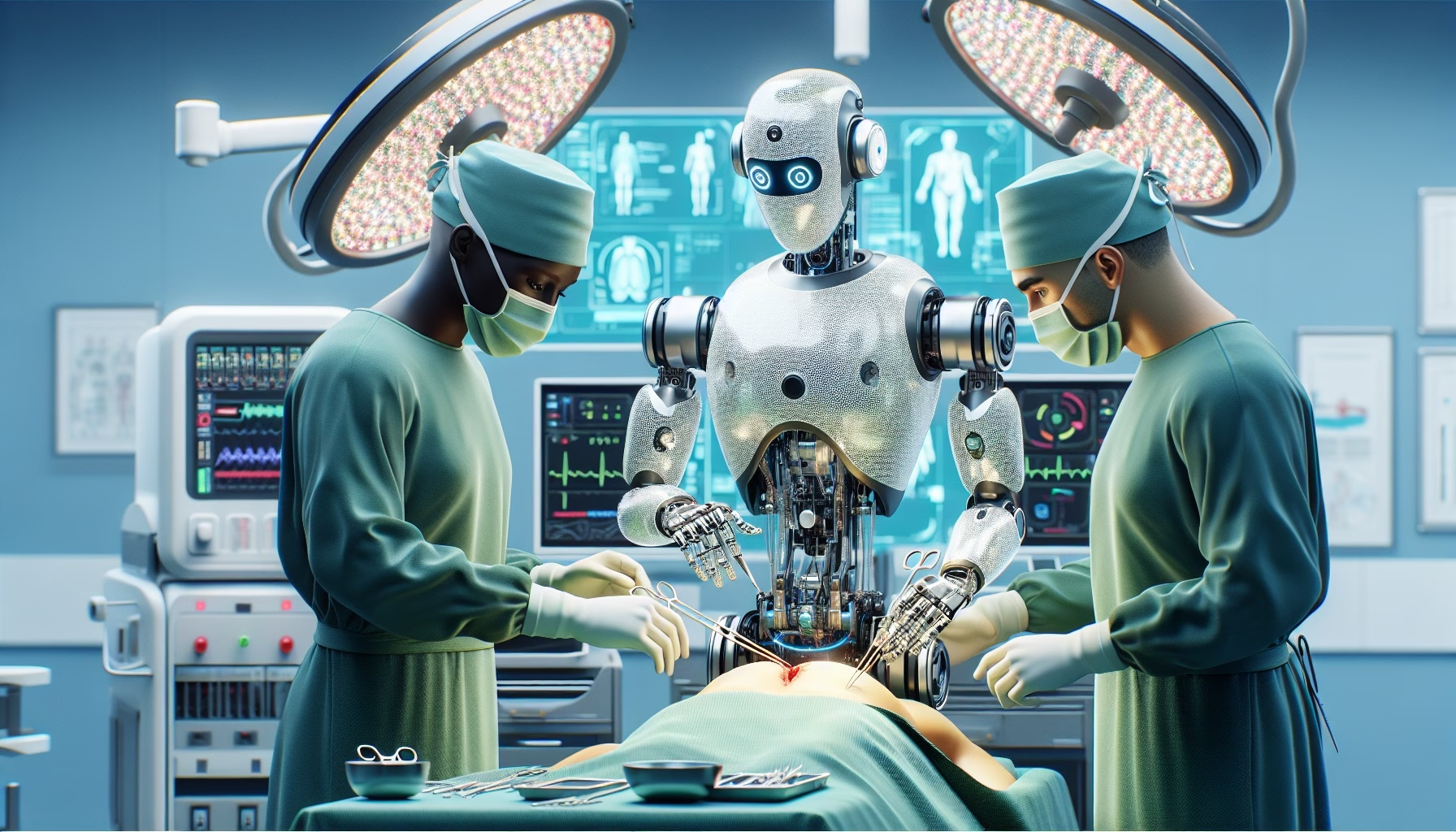
Artificial Intelligence (AI) is rapidly transforming the healthcare industry, reshaping how medical professionals diagnose, treat, and manage patient care. From early disease detection to personalized treatment plans, AI-driven technologies are improving accuracy, efficiency, and outcomes across the healthcare system. As hospitals and clinics adopt digital solutions, AI is emerging as a powerful tool that enhances both patient experience and clinical decision-making.
The Role of AI in Modern Healthcare
AI in healthcare refers to the use of machine learning algorithms, natural language processing, and data analytics to interpret complex medical data. These technologies can analyze vast amounts of information far faster than humans, identifying patterns that support better diagnoses and treatment strategies. By integrating AI into healthcare systems, providers can deliver more precise and timely care.
Electronic health records (EHRs), medical imaging, and wearable devices generate enormous volumes of data. AI systems help convert this data into actionable insights, enabling healthcare professionals to focus more on patient care and less on administrative tasks.
Improved Diagnostics and Early Detection
One of the most significant impacts of AI in healthcare is in diagnostics. AI-powered tools can analyze medical images, such as X-rays, CT scans, and MRIs, with high accuracy. These systems assist radiologists in detecting conditions like cancer, cardiovascular disease, and neurological disorders at earlier stages.
Early detection is critical for successful treatment. AI algorithms can identify subtle abnormalities that might be overlooked by human eyes, leading to quicker diagnoses and improved survival rates. This technology is particularly valuable in regions with limited access to specialized medical professionals.
Personalized Treatment and Precision Medicine
AI is playing a crucial role in advancing personalized medicine. By analyzing genetic data, lifestyle factors, and medical histories, AI can help design customized treatment plans tailored to individual patients. This approach moves away from one-size-fits-all treatments and toward precision healthcare.
For example, AI can predict how patients will respond to certain medications, reducing the risk of adverse reactions and improving treatment effectiveness. In oncology, AI-driven insights support targeted therapies that align with a patient’s genetic profile, improving outcomes and quality of life.
Enhancing Patient Monitoring and Remote Care
Wearable devices and AI-powered remote monitoring tools are transforming how patient health is managed outside clinical settings. These technologies track vital signs such as heart rate, blood pressure, and glucose levels in real time. AI systems analyze this data to detect potential health issues before they become emergencies.
Remote patient monitoring is particularly beneficial for individuals with chronic conditions and older adults. It reduces hospital visits, lowers healthcare costs, and allows patients to receive care in the comfort of their homes. AI-driven alerts enable healthcare providers to intervene promptly when necessary.
Streamlining Administrative Tasks
Beyond clinical applications, AI significantly improves healthcare operations by automating administrative tasks. Scheduling appointments, managing billing, processing insurance claims, and updating patient records are time-consuming activities that can overwhelm healthcare staff.
AI-powered chatbots and virtual assistants handle routine inquiries, freeing medical professionals to focus on patient care. Natural language processing enables AI systems to extract relevant information from clinical notes, reducing documentation burdens and minimizing errors.
AI in Drug Discovery and Research
AI is accelerating drug discovery and medical research by analyzing complex biological data and predicting potential drug candidates. Traditional drug development processes can take years and involve substantial costs. AI shortens this timeline by identifying promising compounds and predicting their effectiveness.
Researchers also use AI to analyze clinical trial data, uncovering insights that support faster and more accurate conclusions. This innovation speeds up the development of new treatments and improves access to life-saving medications.
Ethical Considerations and Challenges
Despite its many benefits, AI in healthcare raises ethical and practical concerns. Data privacy, cybersecurity, and algorithmic bias are critical issues that must be addressed. Healthcare providers must ensure patient data is protected and that AI systems are trained on diverse datasets to avoid biased outcomes.
Additionally, AI should complement—not replace—human expertise. While technology can enhance decision-making, the human element of empathy, judgment, and ethical responsibility remains essential in healthcare.
The Future of AI in Patient Care
The future of AI in healthcare is promising. Advances in machine learning, robotics, and predictive analytics will continue to improve patient outcomes and healthcare efficiency. AI-powered virtual health assistants, predictive disease modeling, and smart hospitals are likely to become more widespread.
As adoption increases, collaboration between healthcare professionals, technologists, and policymakers will be crucial to ensure AI is implemented responsibly and effectively.
Conclusion
AI is transforming patient care by enhancing diagnostics, enabling personalized treatment, improving remote monitoring, and streamlining healthcare operations. While challenges remain, the benefits of AI-driven healthcare are undeniable. By embracing technology responsibly, the healthcare industry can deliver more efficient, accurate, and patient-centered care, shaping a healthier future for individuals and communities worldwide.
Related Posts