Wealth inequality has become one of the most pressing economic and social issues of the modern world. While global wealth has grown significantly over recent decades, its distribution remains deeply uneven. A small percentage of individuals and corporations control a disproportionate share of resources, while millions struggle to meet basic needs. This growing gap between the wealthy and the rest of society has far-reaching consequences that affect economic stability, social cohesion, and long-term development.
Understanding Wealth Inequality
Wealth inequality refers to the unequal distribution of assets such as income, property, investments, and savings among individuals or groups. Unlike income inequality, which focuses on earnings over time, wealth inequality concerns the distribution of accumulated resources and long-term financial security. Wealth provides access to better education, healthcare, housing, and opportunities, making its unequal distribution particularly impactful across generations.
In many countries, wealth inequality has increased due to structural changes in the global economy, technological advancements, and shifts in labor markets. These trends have allowed wealth to concentrate among those with capital and access to high-growth opportunities.
Economic Globalization and Market Dynamics
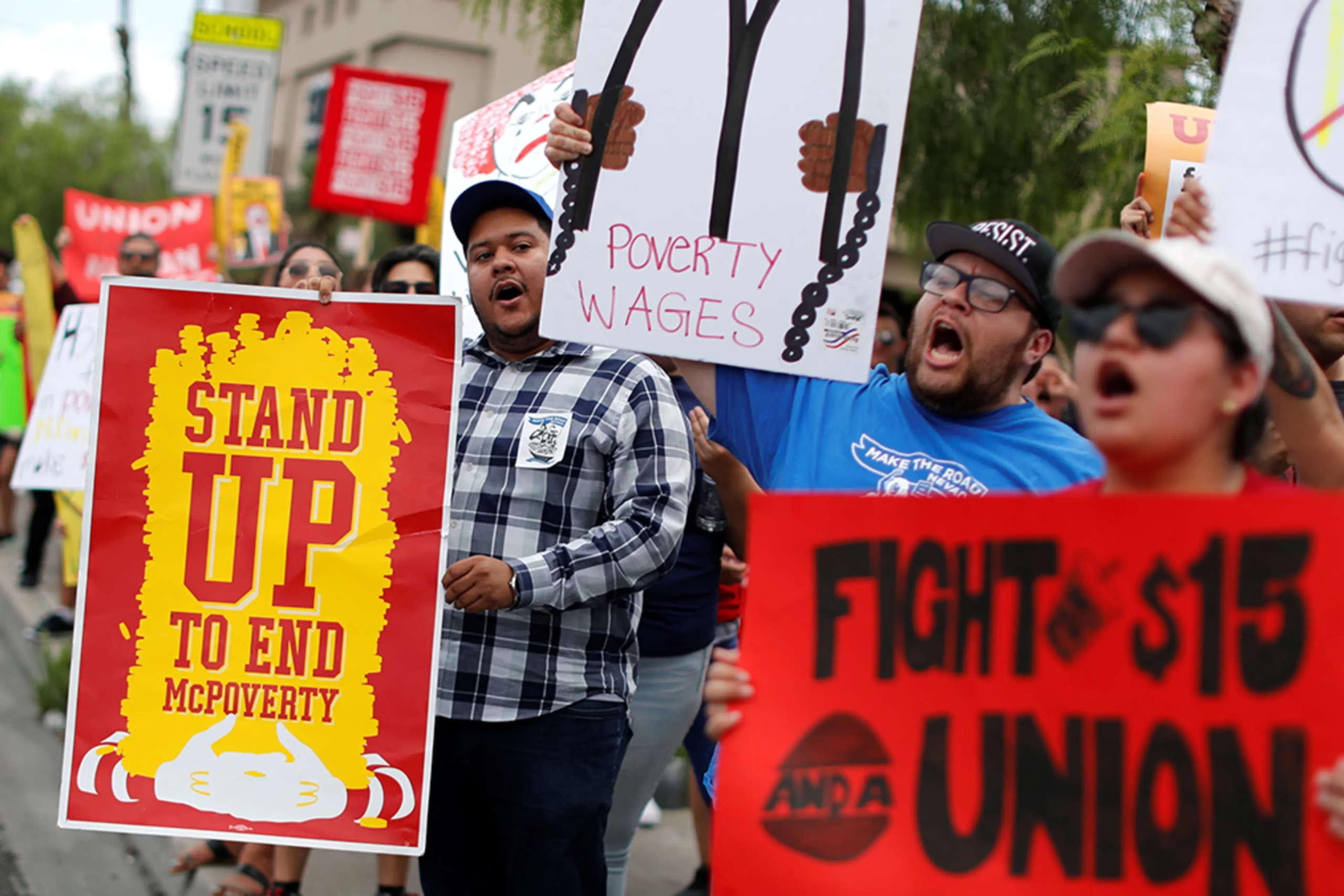
Globalization has reshaped economies by expanding trade, investment, and technological exchange. While it has created wealth and lifted millions out of poverty, globalization has also contributed to inequality. High-skilled workers and multinational corporations benefit more from global markets, while low-skilled workers face wage stagnation and job insecurity.
Financial markets further amplify wealth concentration. Individuals with significant capital can invest in stocks, real estate, and private equity, benefiting from compound growth. In contrast, those with limited savings often lack access to these wealth-building tools, widening the economic divide.
Technological Advancements and Automation
Technology has played a significant role in shaping modern wealth inequality. Automation and artificial intelligence have increased productivity but reduced demand for certain types of labor. Machines increasingly replace jobs requiring routine or manual skills, while high-paying roles in technology and innovation continue to grow.
This shift creates a polarized labor market in which skilled professionals experience rising incomes, while others experience unemployment or underemployment. Without adequate retraining and education programs, technological progress can deepen existing inequalities.
Education and Opportunity Gaps
Education is one of the strongest determinants of wealth accumulation. Individuals with access to quality education are more likely to secure well-paying jobs and build financial stability. However, educational opportunities remain unevenly distributed, often reflecting existing economic disparities.
Rising education costs, limited access to resources, and geographic inequalities restrict upward mobility for many people. As a result, wealth inequality becomes self-reinforcing, passing advantages and disadvantages from one generation to the next.
Tax Policies and Government Systems
Taxation and public policy significantly influence wealth distribution. In some regions, tax systems favor capital gains and inheritance over labor income, allowing wealth to accumulate among the already wealthy. Weak enforcement and tax loopholes further exacerbate inequality.
At the same time, reduced public investment in healthcare, education, and social welfare places a greater burden on low- and middle-income populations. When governments fail to address systemic imbalances, wealth inequality tends to grow unchecked.
Long-Term Social and Economic Effects
The long-term effects of wealth inequality extend beyond financial disparities. High levels of inequality can weaken social cohesion and erode trust in institutions. When large segments of the population feel excluded from economic progress, political polarization and social unrest often increase.
Economically, wealth inequality can slow overall growth. When wealth is concentrated among a few, consumer spending declines, reducing demand and limiting economic expansion. Unequal societies also tend to experience higher crime rates, poorer health outcomes, and lower educational attainment.
Intergenerational Impact
One of the most concerning aspects of wealth inequality is its intergenerational impact. Children born into wealthy families benefit from inherited assets, better education, and stronger networks. Meanwhile, those born into poverty face systemic barriers that limit upward mobility.
This cycle makes it increasingly difficult for individuals to improve their economic standing, reinforcing inequality over time. Without intervention, wealth inequality can persist for generations, undermining the concept of equal opportunity.
Addressing Wealth Inequality
Reducing wealth inequality requires coordinated efforts across economic, educational, and political systems. Progressive tax policies, investments in public education, affordable healthcare, and workforce training programs can help create a more balanced distribution of wealth.
Encouraging inclusive economic growth, supporting small businesses, and expanding access to financial services are also essential steps. While eliminating wealth inequality may be unrealistic, reducing extreme disparities can promote social stability and long-term prosperity.
Conclusion
Wealth inequality in the modern world is a complex issue driven by globalization, technological change, educational disparities, and policy choices. Its long-term effects threaten economic growth, social harmony, and generational mobility. Addressing this challenge requires thoughtful policies and collective action to create fairer opportunities for all. By understanding the causes and consequences of wealth inequality, societies can work toward a more inclusive and sustainable future.
Related Posts