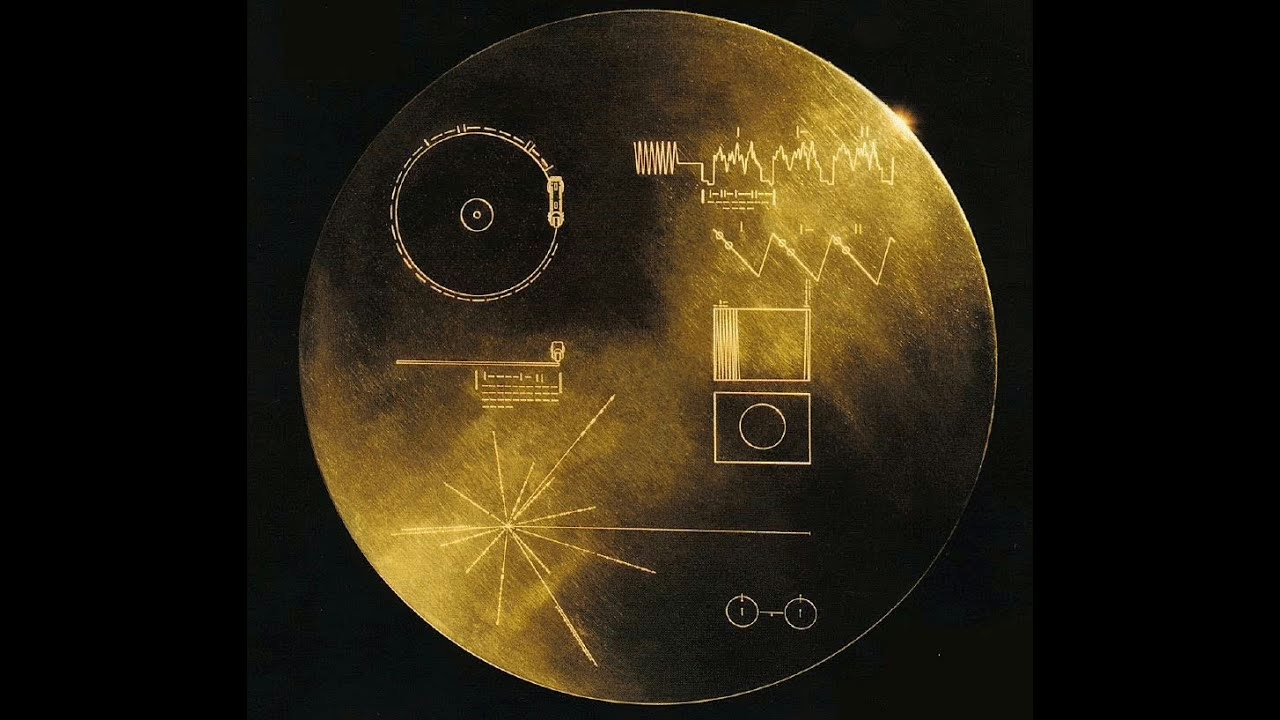
In 1977, NASA launched two spacecraft—Voyager 1 and Voyager 2—on a mission to explore the outer planets. What they became instead was something far more profound: humanity’s final message to the universe.
Each Voyager carries a Golden Record, a gold-plated copper disc designed to outlast Earth itself. On it are sounds of nature, music from different cultures, greetings in 55 languages, and images of life on Earth.
One day, long after humanity is gone, this record may be all that remains of us.
A Message Sent Into Eternity
The Golden Record includes laughter, heartbeats, whale songs, and greetings like “Hello from the children of planet Earth.” It contains music from Bach, Beethoven, and traditional songs from around the world.
It was never meant to be found soon. Voyager is traveling through interstellar space, where distances are measured in light-years. If discovered at all, it would be by beings we can’t imagine—millions or even billions of years in the future.
By then, Earth may no longer exist.
What Voyager Says About Us
What’s haunting isn’t just what’s on the record—it’s what’s missing. There are no wars. No borders. No hatred. Voyager presents an idealized version of humanity: curious, peaceful, hopeful.
It’s not a warning.
It’s not a confession.
It’s a quiet introduction.
In a way, Voyager is humanity’s attempt to be remembered kindly.
When the Sun Burns Out
In about five billion years, the Sun will expand into a red giant and likely consume Earth. All human structures, cities, and digital records will vanish. Satellites will decay. Monuments will crumble.
But Voyager may continue drifting through space for billions of years, untouched by erosion or time.
Long after our planet becomes cosmic dust, Voyager will still carry proof that once—briefly—something alive tried to reach beyond itself.
Our Cosmic Tombstone
Voyager’s final message isn’t just for aliens. It’s for us.
It reminds us that civilizations are temporary, but curiosity is eternal. And when Earth is gone, humanity’s last echo may not be our technology or power—but our attempt to say, “We were here.”
Related Posts