
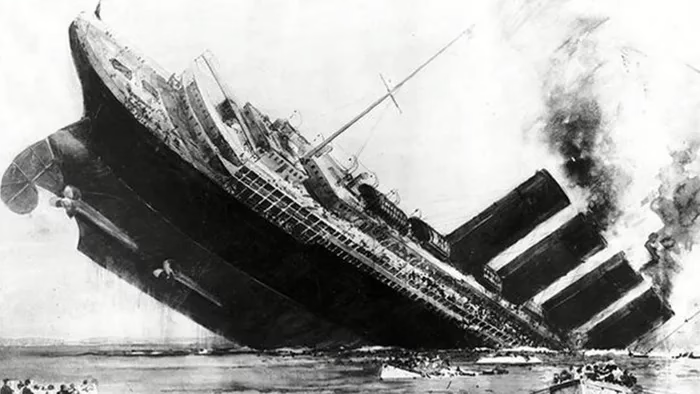
The Titanic was designed to survive disaster. Marketed as “unsinkable,” it featured watertight compartments meant to keep the ship afloat even if several were breached.
Yet on April 15, 1912, the Titanic sank in just 2 hours and 40 minutes after hitting an iceberg.
That speed shocked even naval engineers.
So what really caused the Titanic to sink so fast?
The Iceberg Was Only the Beginning
Contrary to popular belief, the iceberg didn’t tear a massive gash in the hull. Instead, it caused a series of small punctures along the ship’s side. These breaches affected six compartments—one more than the Titanic was designed to handle.
But that alone doesn’t explain the rapid sinking.
A Design Flaw Hidden in Plain Sight
The Titanic’s watertight compartments didn’t extend to the top of the ship. As water filled the damaged sections, it spilled over from one compartment to the next—like ice trays tipping forward.
Once that chain reaction began, sinking became inevitable.
Even worse, the steel used in the hull was brittle in cold temperatures. Modern studies suggest the metal fractured more easily in icy Atlantic waters, worsening the damage.
The Fatal Human Decisions
Speed played a crucial role. Despite iceberg warnings, the Titanic continued at near-maximum speed to maintain schedule and prestige. Slowing down could have reduced the impact—or avoided it entirely.
Then came the evacuation failures:
- Not enough lifeboats
- Confusing commands
- Delayed launches
Many boats left half-empty while hundreds remained aboard.
Why It Still Matters
The Titanic didn’t sink because of one mistake. It sank because of overconfidence, flawed design, and the ignoring of warnings.
It’s a lesson written in icy water: the most dangerous belief isn’t that disaster can happen—it’s believing it can’t happen to you.
The Titanic sank faster than it should have because humanity trusted technology more than reality.
And the ocean reminded us who was really in control.
Related Posts