
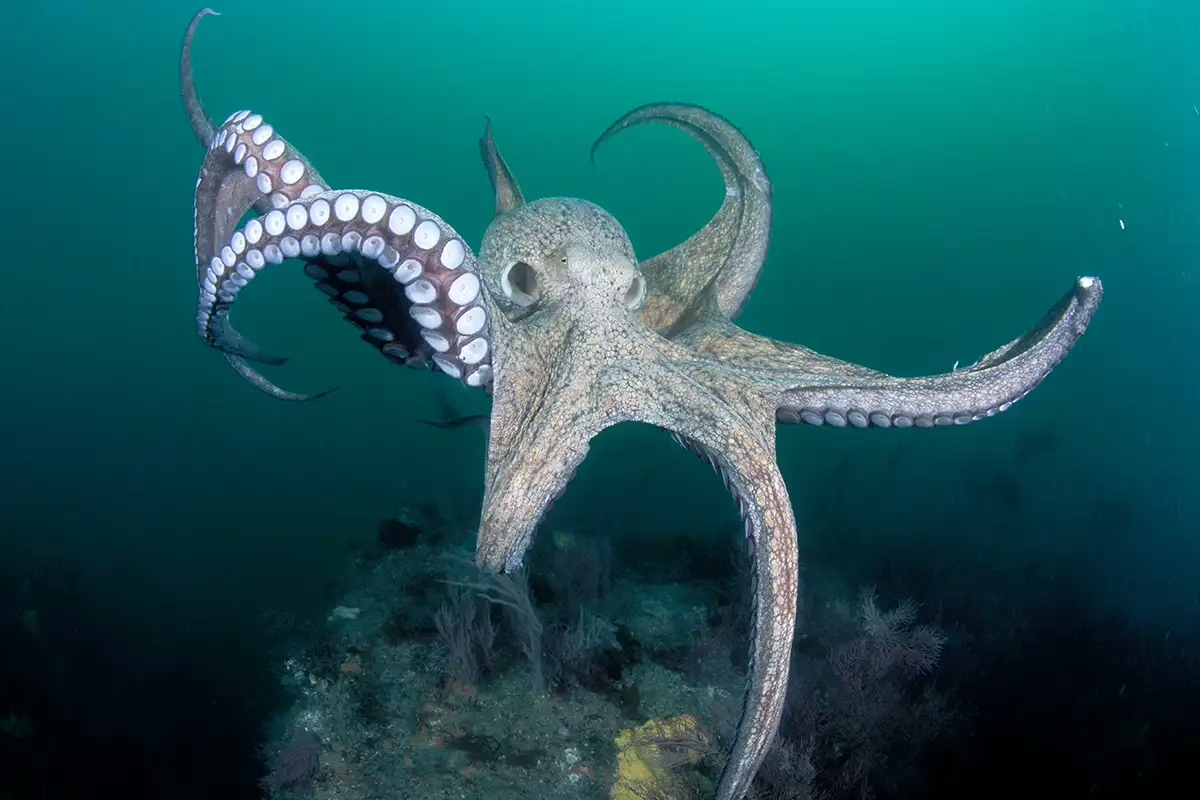
Octopuses are often called the aliens of the ocean—and for good reason. With their shape-shifting bodies, high intelligence, and escape-artist skills, they already seem otherworldly. But their biology is even stranger. Octopuses have three hearts, blue blood, and the ability to taste with their suckers, making them one of the most fascinating creatures on Earth.
These features aren’t evolutionary accidents. Each plays a vital role in helping octopuses survive in the demanding world beneath the waves.
Why Octopuses Have Three Hearts
Unlike humans, who have a single heart, octopuses have three separate hearts that work together.
- Two branchial hearts pump blood through the gills, where oxygen is absorbed.
- One systemic heart pumps oxygen-rich blood to the rest of the body.
This unusual system is necessary because octopus blood is less efficient at carrying oxygen than human blood. Having multiple hearts ensures their muscles and brain receive enough oxygen, especially during intense activity.
Interestingly, when an octopus swims, its main heart actually stops beating. This is why octopuses prefer crawling along the ocean floor rather than swimming—it’s far less exhausting.
The Mystery of Blue Blood
Octopus blood is blue, not red. The reason lies in the molecule that transports oxygen.
Humans use hemoglobin, which contains iron and turns red when exposed to oxygen. Octopuses use hemocyanin, a copper-based molecule that turns blue when oxygenated.
Hemocyanin works better than hemoglobin in:
- Cold temperatures
- Low-oxygen environments
- Deep ocean conditions
This adaptation allows octopuses to thrive in environments where many other creatures would struggle to survive.
Tasting with Their Suckers
One of the most astonishing octopus abilities is their capacity to taste with their suckers. Each sucker contains specialized sensory cells that can detect chemical signals.
This means octopuses can:
- Taste prey before eating it
- Identify harmful substances
- Explore their environment through touch and taste simultaneously
When an octopus reaches out to grab something, it’s not just feeling—it’s sampling. This gives them an incredible advantage when hunting or navigating unfamiliar terrain.
A Brain Unlike Any Other
Adding to their strangeness, octopuses don’t rely solely on a central brain. About half of their neurons are located in their arms, allowing each limb to act semi-independently.
An octopus arm can:
- React to stimuli on its own
- Grasp and manipulate objects
- Continue moving even when severed
This decentralized intelligence is rare in the animal kingdom and contributes to their reputation as one of the smartest invertebrates on the planet.
Why These Traits Matter
These extraordinary features make octopuses:
- Highly adaptable hunters
- Excellent problem solvers
- Masters of survival in harsh environments
Their unique biology continues to inspire scientific research, including studies in robotics, artificial intelligence, and medical science.
Final Thoughts
Three hearts. Blue blood. Taste-sensing suckers. Octopuses challenge our understanding of what life can look like. They are living proof that evolution doesn’t follow a single blueprint—it experiments, adapts, and sometimes creates creatures so strange they feel unreal.
In the deep ocean, the octopus reigns as one of nature’s most astonishing masterpieces.
Related Posts